
Everyone thinks working farm dogs just herd. Push stock from here to there, look dramatic doing it, call it a day. The actual job is bigger than that. A dog that only herds is like a ranch hand who only drives - useful sometimes, but you need someone who can do more.
The dogs that really earn their keep are the ones who handle the full range of farm tasks. Guarding the chicken coop. Finding a calf that's hidden itself somewhere in two hundred acres. Holding a gate for twenty minutes while you sort stock. Alerting on predators. Staying put when staying put is more useful than chasing something. None of this is natural. All of it requires training.
The Foundation: Before Specialized Tasks
Every task I'm going to describe builds on basic obedience. And I mean real obedience - the kind where your dog responds immediately even when something more interesting is happening. Not tricks for treats in a quiet kitchen. Commands that work when cattle are running and adrenaline is pumping.
Before any specialized training, your dog needs:
- A rock-solid recall that works from any distance, in any situation
- A reliable stop - down or stand, whatever you use - that holds until released
- A stay that doesn't break when you walk away, even if stock moves
- The ability to accept correction without shutting down or escalating
If you don't have these, you're not ready for advanced training. Go back and solidify the basics. I've seen dogs with excellent natural ability wash out because nobody taught them foundational control. All that talent, wasted because the dog couldn't stop when stopping was what was needed. You can see how these basics play out in a real day of working farm collie life.
Guarding: The Overnight Job
Most herding breeds aren't natural guardians. They've got the alert instinct but not the territorial aggression that makes a livestock guardian effective. What you can train is a herding dog that raises the alarm reliably and holds position until you respond.
Blue sleeps on the porch during lambing season. His job isn't to fight off predators - that's what the Pyrenees are for over in the main flock. Blue's job is to notice things that don't belong and let me know. He learned this through repetition and reward.
Started by teaching him a "watch" command that meant stay alert and bark at anything unusual. First, I'd have someone approach the house at night while I was with Blue, and reward him when he noticed and barked. Then I'd leave him alone on the porch and have the same approach happen. If he barked, he got released and praised. If he didn't notice, no reward and we'd try again.
Over about two months, Blue figured out that staying alert and reporting disturbances was part of his job. Now he'll bark at coyotes at 3 AM but ignores the neighbor's dog that wanders over sometimes because he's learned that dog isn't a threat. That discrimination took time, but it's what makes him useful instead of just noisy.
Guarding vs. Herding Instinct
Be careful asking a strong herding dog to guard. Their instinct is to control movement, not prevent it. A dog with too much eye might stalk predators instead of driving them off, which is dangerous and ineffective. Choose which dogs handle guarding duties based on their natural style. Dogs with less eye and more bark often make better alarm dogs.
Finding Lost Stock: Search and Indicate
Every spring, we lose calves. Not to predators - to the calves themselves. A newborn calf's instinct is to hide. The cow goes off to graze, comes back, and can't find where her calf bedded down. Now you've got a bawling cow, a hidden calf, and maybe a hundred acres to search.
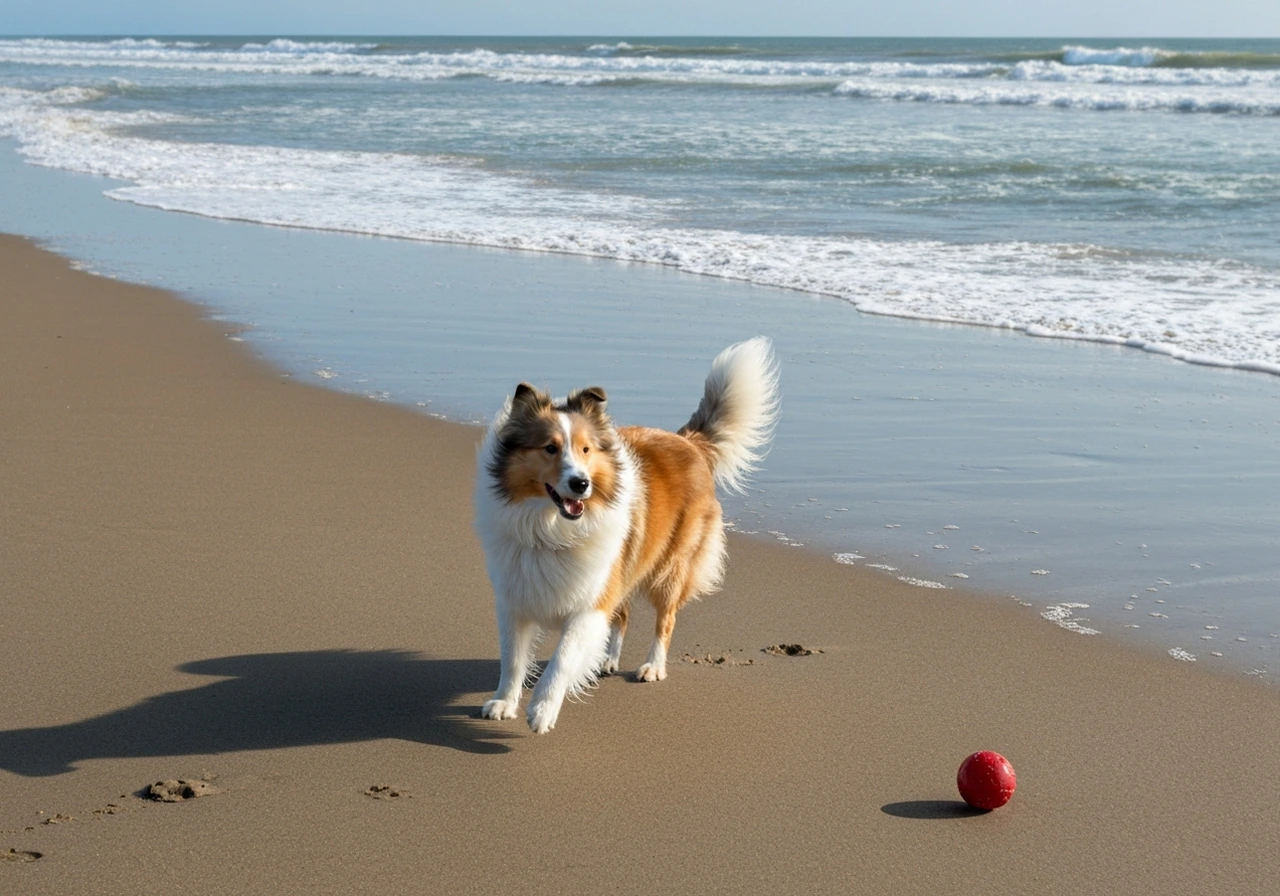
Sage is my search dog. She learned this task over two seasons, and now she can find a hidden calf in twenty minutes that would take me an hour to locate on foot.
Training started simple. Had my wife hide in the brush with treats while Sage watched. Sent Sage to find her. Reward. Gradually increased the difficulty - longer distances, better hiding spots, eventually areas Sage hadn't seen the person go into.
Then we switched to calves. Easier in some ways because calves have a strong scent, harder because Sage had to learn that finding didn't mean chasing. The behavior I wanted was: locate the calf, come back to me, indicate by sitting and staring in the direction. Then I'd follow her back to the find.
The "don't chase" part was crucial. A calf that's been chased by a dog will run from dogs forever after, making it harder to work when it grows up. Sage had to learn that finding ended the job. No pursuit allowed.
Gate Work: Holding Without Commands
When I'm sorting cattle through a gate, I need a dog that holds position without constant direction. I'm focused on the stock coming through - I can't be managing my dog at the same time. The dog needs to read the flow and make decisions independently.
This is advanced work that takes a mature dog and a lot of trust on both sides. Here's how I built it with Sage:
Started with short duration holds in low-pressure situations. Put her at the gate, asked for a down-stay, walked away. If she broke, correction and reset. If she held, release and reward after a few minutes.
Added stock movement gradually. First, stock moving past but not toward her. Then stock approaching but with plenty of space. Then stock that might try to break back through the gate she was holding.
The key transition was teaching her to apply pressure independently. When a cow turned back toward her gate, I wanted Sage to get up, block, and return to her position without me saying anything. This took months. She had to learn the difference between "hold position" and "hold the gate" - the first is passive, the second requires active decision-making.
During gate training, I corrected Sage for breaking position without reason but not for getting up to block a cow that was making a move. Reading the difference between a dog breaking stay out of boredom versus a dog reading a situation and responding appropriately takes experience. When in doubt, give the dog the benefit of the doubt, then watch what happens next. If they were right, they learn you trust them. If they were wrong, they learn the consequence.
The Quiet Commands: When Not to Work
Sometimes the most valuable thing a working dog can do is nothing. Stay out of the way. Be still. Wait.
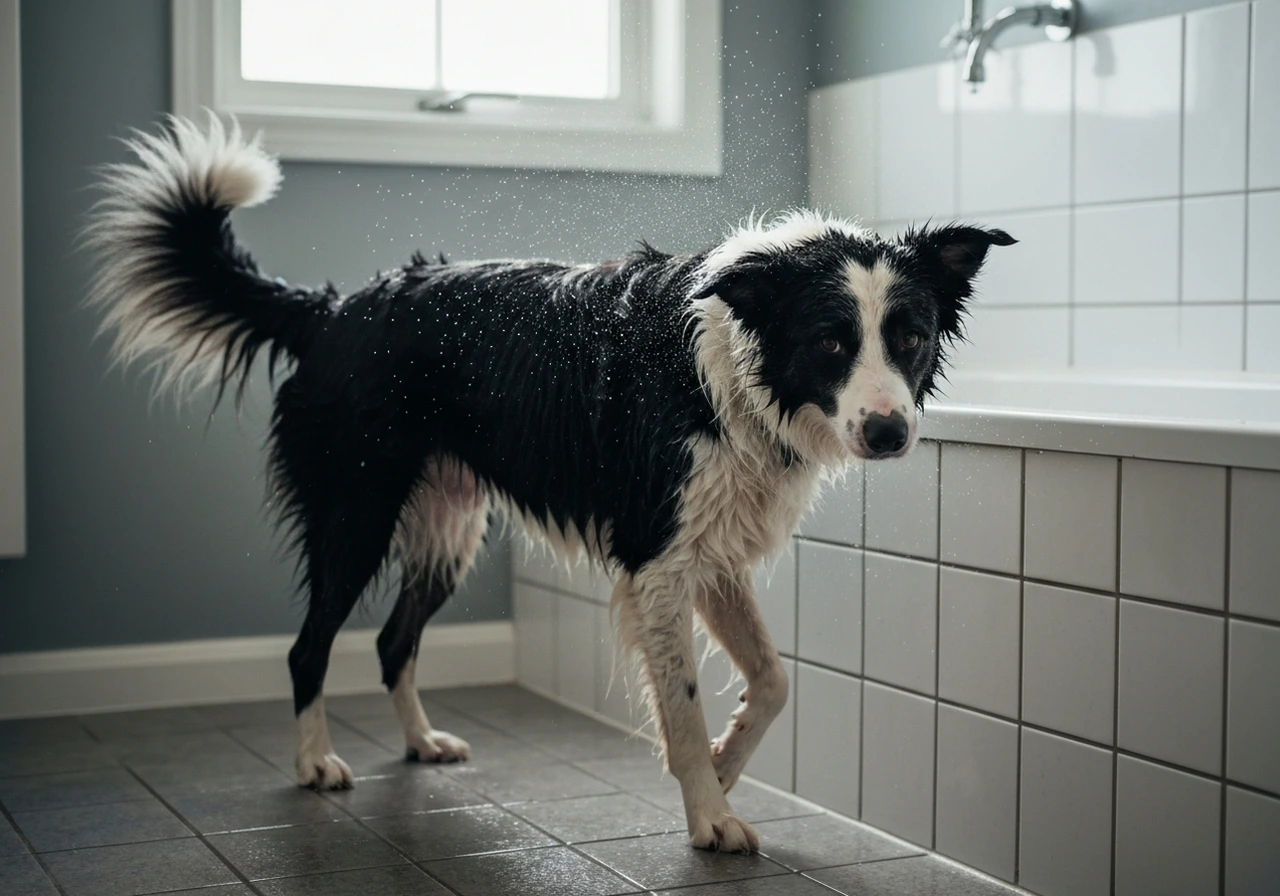
This is surprisingly hard to train in dogs bred for action. Herding dogs want to work. Sitting quietly while something interesting happens goes against every instinct they have. But a dog that can't turn off is a liability.
I train this with what I call "passive presence" work. The dog comes with me but doesn't participate. They have to lie quietly while I fix fence, sort through equipment, have conversations, whatever. Breaking the down means correction. Staying quiet gets acknowledged at the end.
Eventually the dog learns that sometimes the job is simply being there. Blue will lie in the back of the truck for two hours while I'm at an auction, barely moving. He knows his job right now is to wait. That didn't come naturally - it took months of boring training sessions to build that patience.
Predator Alert: Bark on Command and Context
Related to guarding but different enough to train separately: teaching a dog to bark specifically at predators while ignoring non-threats.
Most dogs bark at everything. What I need is a dog that distinguishes between the UPS truck (ignore) and a coyote testing the fence line (alert immediately). This discrimination comes from two things: exposure and feedback.
Blue knows what a coyote looks like, sounds like, and smells like because he's encountered dozens of them in controlled situations. When we see coyotes, I encourage the bark. When we see deer, I quiet him. When we see the neighbor's cattle dog, I ignore his alert because I don't want to reward barking at non-threats.
Over years, this has calibrated his alarm system. He doesn't bark at every distant movement anymore. When Blue barks now, I pay attention, because it means something.
The Training Mindset
All these specialized tasks share some common principles:
Build complexity gradually. Every advanced behavior started as something simple that we added difficulty to over time. Trying to train the full, final behavior all at once doesn't work.
Reward the thinking, not just the action. The best working dogs make decisions. When your dog figures something out independently, that's worth more reward than mechanical obedience. You want a partner, not a robot.
Train in real conditions. Skills learned in the arena don't always transfer to the field. As soon as basics are solid, move training to actual working environments with real distractions and pressures.
Accept that timing matters. A young dog isn't ready for all tasks. Choosing the right prospect gives you the raw material, but physical and mental maturity determines when specific training can start. Rush it and you'll either overwhelm the dog or create bad habits that take forever to fix.
For dogs bred with true working genetics, understanding the herding instinct and how it expresses differently across tasks helps you shape training to work with the dog's nature rather than against it.
Once your dog masters multiple tasks, the next challenge is coordinating them in a multi-dog team where each dog handles what they do best. That's when a working operation really starts to run smooth.